What Apparel Brands Should Know Before Launching A Private Label Denim Line
What Apparel Brands Should Know Before Launching A Private Label Denim Line
Launching a private-label denim line is one of the most rewarding moves for emerging apparel founders, streetwear startups, and boutique fashion brands. Denim remains a timeless, high-demand wardrobe staple with strong repeat purchase rates, excellent retail margin potential, and broad global market appeal. However, many new brand owners mistakenly believe that launching custom denim is as simple as selecting a few styles and placing a production order. In reality, successful private-label denim development relies on precise technical planning, clear manufacturing workflows, realistic budget allocation, and strategic supplier collaboration.
Most first-time denim brand creators encounter avoidable obstacles: inconsistent wash batches, misaligned garment fitting, delayed sample development, unclear MOQ policies, unexpected production cost hikes, and poor post-delivery quality consistency. These issues often stem from a lack of understanding of professional denim manufacturing standards, OEM and ODM service differences, and end-to-end apparel production workflows. Before investing in fabric sourcing, sample making, and bulk production, every brand founder must master core industry knowledge to reduce risks, shorten launch cycles, and build a sustainable denim brand. In this comprehensive guide, we break down every critical detail for launching a profitable, stable private-label denim collection for new and growing apparel businesses.
Clarify Brand Positioning & Collection Scope Before Denim Development
The first step of private-label denim manufacturing is not style selection, but precise brand positioning and collection scope definition. Many startup brands rush into sample development without confirming core brand attributes, resulting in scattered product styles, inconsistent brand aesthetics, and wasted development costs. To build a competitive denim line, you need to lock down your target customer group, market positioning, price range, and core style orientation in advance.
For streetwear-focused brands, oversized baggy silhouettes, distressed detailing, unique paint splatter finishes, and vintage faded washes are mainstream market demands. For casual daily wear brands, classic straight-leg jeans, basic skinny styles, and simple clean-wash denim with durable stitching are more suitable. For high-end boutique labels, premium heavyweight denim, custom hardware, exclusive hand-finishing crafts, and personalized branding details become core selling points. Clarifying your positioning helps you filter suitable denim fabrics, washing techniques, and custom details, avoiding blind customized development.
Meanwhile, new brands need to control the initial collection scale reasonably. Launching too many silhouettes, wash variations, and custom details in the first batch will greatly increase sample development cycles, production difficulty, and overall costs. Industry professionals recommend that startup denim brands launch 3 to 5 core styles in the first collection, verify market feedback and customer preferences, and then expand product categories and customized content in subsequent seasons. This low-risk launch strategy effectively reduces inventory pressure and trial-and-error costs for new apparel lines.
A professional denim manufacturing partner can help you sort out feasible development plans according to brand positioning and market demand. Standardized and systematic production processes are the core guarantee for brand product stability, which is fully reflected in our professional Custom Denim OEM & ODM Manufacturing Solutions. Whether you need full-process customized development or semi-custom ODM style modification, standardized OEM and ODM workflows can efficiently match your brand’s development rhythm.
Understand Core Differences Between Denim OEM and ODM Manufacturing
Most new apparel brand owners cannot clearly distinguish between denim OEM manufacturing and ODM manufacturing, which leads to wrong supplier selection and mismatched service demands. Choosing the right production mode according to your brand’s independent design capability is the key to improving development efficiency and controlling costs.
Denim OEM service refers to customized processing based on the brand’s complete design drawings, tech packs, and style specifications. Brands provide detailed parameter standards including garment dimensions, fabric requirements, stitching standards, wash effects, hardware specifications, and labeling styles, and the factory is only responsible for production and processing. This mode is very suitable for brands with independent design teams and mature product positioning, which can fully control product uniqueness and brand exclusivity.
Denim ODM service means the factory provides ready-made popular styles, mature wash formulas, and classic silhouettes, and brands can make secondary modifications on the basis of existing styles, such as adjusting pant leg width, changing washing depth, replacing hardware accessories, and adding exclusive brand logos. This mode is more suitable for startup brands without complete design teams, which can greatly shorten sample development time and reduce design and development costs.
Many professional denim manufacturers support hybrid OEM and ODM services, flexibly matching different brand development needs. For new brands that are exploring market styles, ODM micro-customization can be used for trial production; for mature brands that need exclusive product barriers, full OEM customized development is more in line with long-term brand development goals. Clarifying the two service modes can help you avoid communication deviations in supplier docking and improve the accuracy of customized development.
Master Denim Fabric Selection Standards for Private Label Collections
Fabric is the foundation of denim garment quality and the core factor determining wearing experience, wash durability, and product grade. Many new brands only focus on the appearance of denim styles while ignoring fabric performance parameters, resulting in products with good-looking appearance but poor actual wearing experience, which affects brand repurchase rates.
Common denim fabric parameters that brands need to pay attention to include fabric weight, cotton content, stretch rate, weaving density, shrinkage rate, and fabric hardness. Heavyweight denim above 12oz has a strong three-dimensional sense, good shape retention, and is suitable for vintage streetwear and high-end customized jeans, but it has a longer break-in period. Medium-weight denim of 8oz to 11oz is balanced in comfort and shape, suitable for daily casual denim pants and jackets, and is the most mainstream choice for mass market brands. Lightweight denim below 7oz is soft and breathable, suitable for summer denim styles and women’s casual denim wear, but has poor wear resistance and shape retention.
Stretch denim is more popular in the consumer market than rigid denim. Brands need to reasonably select spandex content according to style positioning: low-stretch denim with 2% to 3% spandex ensures both comfort and shape stability, suitable for basic daily styles; high-stretch denim with 4% to 5% spandex is more fit and elastic, suitable for skinny jeans and tight-fitting denim styles. It is worth noting that excessive stretch will reduce denim’s classic texture and cause deformation after long-term wear, so stretch ratio control is particularly important in customized production.
In addition, formaldehyde content, color fastness, and environmental protection indicators of denim fabrics are key to brand compliance sales. Regular denim manufacturers use Oeko-Tex certified environmentally friendly fabrics and reactive dyeing processes to ensure that the garments meet European and American market environmental protection standards, avoiding sales risks caused by unqualified fabric testing. Before batch production, brands must ask suppliers to provide fabric test reports and physical fabric swatches to confirm fabric quality and performance.
Standard Denim Washing & Finishing Craft Selection Guide
The diversity of denim wash finishes is the core competitiveness of private-label denim lines. Different washing processes can completely change the style, tone, and texture of the same denim fabric, creating differentiated product positioning for brands. New brands need to understand the characteristics and applicable scenarios of mainstream denim washing crafts to avoid unrealistic customized demands.
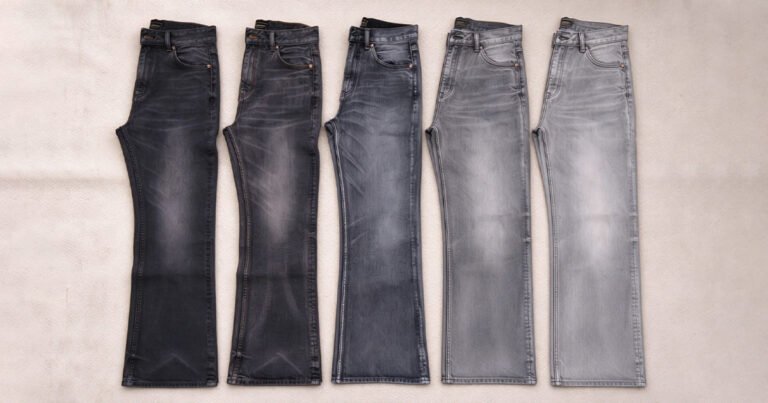
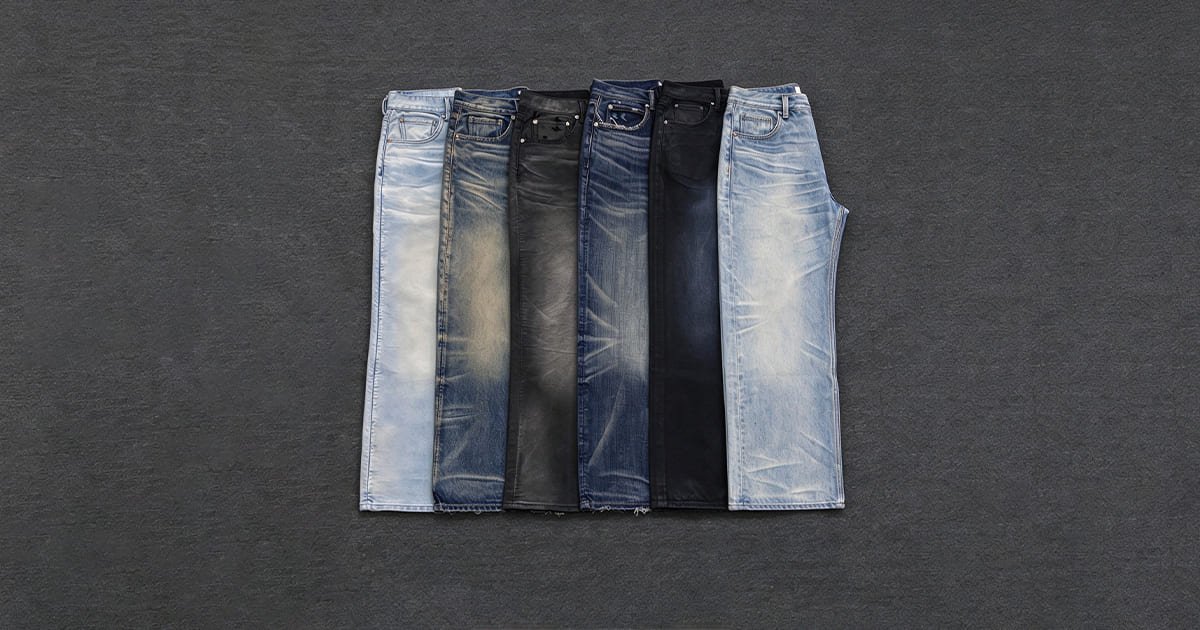
Basic washing crafts include raw wash, dark solid wash, medium flat wash, and light bleached wash, which are low in defect rate, stable in batch consistency, suitable for basic mass-produced denim styles, and friendly to new brands with low order volumes. Vintage washing crafts include stone wash, enzyme wash, snow wash, and sand wash, which have obvious retro fading textures and are very popular in streetwear and vintage fashion markets. Advanced personalized finishing includes hand scraping, whiskering, knee distressing, paint splatter, frayed hem, and destroyed hole treatment, which can create exclusive style features for high-end customized denim.
It is important to note that complex washing and finishing processes have higher technical requirements and batch fluctuation risks. Manual finishing details are affected by workers’ operation standards, and slight tone differences between batches are inevitable. Professional denim factories will formulate unified washing formulas and operation standards, and conduct pre-production wash sample tests to maximize batch consistency. For startup brands, it is recommended to start with stable basic washing processes, and try complex personalized finishing after verifying market acceptance.
Complete Denim Sample Development Process & Timeline Arrangement
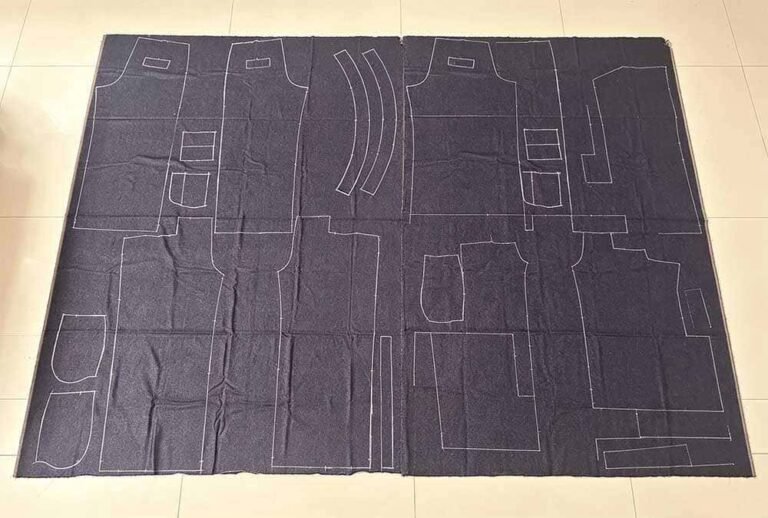
Sample development is the most critical link connecting brand design and mass production, and it is also the stage most prone to delays and repeated revisions. Many new brands have unreasonable time expectations for sample making, resulting in delayed overall product launch plans. A complete private-label denim sample process includes four core stages: prototype sample, fit sample, pre-production sample, and sealed production sample.
The prototype sample is mainly used to verify the overall silhouette, style structure, and preliminary wash effect, focusing on restoring the brand’s design concept without strict size parameter requirements. The fit sample takes body data and size standards as the core, repeatedly adjusts pant leg radian, waistband tightness, crotch depth, and overall proportion to ensure the wearing fit of different body types. The pre-production sample locks all final details including fabric batch, wash formula, stitching standard, hardware style, logo position, and labeling specification, which is the direct standard for bulk production.
The entire sample cycle of conventional denim styles is 7 to 12 working days, and complex customized styles with multi-process finishing take 12 to 18 working days. Brands need to reserve sufficient revision time for sample adjustment. It is normal for new denim styles to go through 2 to 3 rounds of sample revisions, and rushing the sample process will lead to unqualified final samples and mass production rework.
Reasonable Understanding of Denim MOQ Rules for Startup Brands
Minimum order quantity is the core concern of almost all startup denim brands. Many new entrepreneurs are trapped in ultra-low MOQ marketing traps, ignoring the unit cost and process limitations of small-batch production. In fact, the MOQ setting of denim factories is based on fabric batch, production line scheduling, and process costs.
Large-scale traditional denim factories usually have a single-style MOQ of 300 to 500 pieces, which is suitable for mature brands with stable sales volume. Professional small-batch denim manufacturers support flexible low MOQ customized services, with single-style starting orders of 100 to 200 pieces, which perfectly matches the trial production needs of startup brands. It is worth noting that ultra-low MOQ orders below 100 pieces will lead to significantly increased unit production costs, because the fixed costs of plate making, sample development, and machine debugging cannot be shared by large batches.
Brands can choose flexible ordering strategies according to their own conditions: launch multiple styles with low MOQ for trial sales in the early stage, retain hot styles for batch replenishment, and eliminate unsalable styles in time, which can effectively balance inventory risk and production cost. Regular denim manufacturers will provide transparent MOQ policies and cost accounting standards, helping new brands make reasonable order plans.
Denim Quality Control & Batch Consistency Assurance Mechanism
Quality consistency is the core foundation for the long-term development of private-label denim brands. Many new brands encounter the problem of “qualified samples but unstable bulk goods”, which seriously affects user reputation and repurchase rates. Professional denim manufacturing requires multi-link QC inspection mechanisms to control product quality from raw materials to finished products.
Complete denim QC processes include raw fabric incoming inspection, inline production inspection, semi-finished product washing inspection, finished product appearance inspection, size parameter detection, and packaging inspection. The factory QC team will check fabric texture defects, stitching uniformity, wash tone consistency, hardware firmness, distressing detail standardization, and overall garment flatness one by one. Unqualified products will be reworked and corrected in time to ensure that the batch quality is consistent with the sealed sample.
In addition, batch difference control of washing tone is a key difficulty in denim quality control. Professional factories use fixed water temperature, reagent ratio, and processing time for batch washing, and match the same batch of fabrics and accessories to minimize color difference. For customized styles with high consistency requirements, the factory will provide batch color difference tolerance standards in advance to ensure that products meet brand sales requirements.
Project Timeline & Risk Control for Denim Brand Launch
A complete private-label denim project from design confirmation to bulk shipment requires a complete time cycle, and new brands must reserve sufficient buffer time to avoid launch delays caused by unexpected problems. The conventional timeline is: design & tech pack confirmation (3-5 days) → fabric sourcing & swatch confirmation (5-7 days) → multi-round sample development & revision (7-15 days) → pre-production preparation (3-5 days) → bulk production (15-25 days) → finished product QC & packaging (3-5 days) → shipment arrangement.
Common project risks include fabric stock shortage, wash process adjustment failure, sample revision overtime, production line scheduling delay, and unqualified finished product QC. Brands need to communicate with suppliers in advance to confirm material supply cycles and production schedules, and reserve 7 to 10 days of buffer time for the overall project to ensure the normal launch of new products. Avoid compressing the production cycle excessively, which will only lead to reduced product quality and increased defect rates.
Conclusion
Launching a private-label denim line is a systematic project that integrates brand positioning, design development, fabric selection, craft customization, sample revision, batch production, and quality control. It is not only a test of brand design capability, but also a comprehensive assessment of supplier manufacturing strength and service professionalism. Most new denim brand failures are not due to poor design, but due to unfamiliarity with manufacturing processes, unreasonable time planning, and improper supplier matching.
By clarifying OEM and ODM service differences, selecting suitable denim fabrics and washing crafts, standardizing sample development processes, rationally arranging MOQ and production cycles, and paying attention to full-link quality control, startup brands can effectively reduce trial-and-error costs, improve product competitiveness, and build a stable and profitable private-label denim business. Choosing a professional, standardized, and flexible denim manufacturing partner is the most important first step for brand long-term development.