What Details Should Be In A Custom Jeans Tech Pack?
What Details Should Be In A Custom Jeans Tech Pack?
Many design teams spend weeks refining denim fabric weight, cut and wash recipes, only to run into avoidable delays once they start specifying hardware. The term “trims” covers all secondary components attached to denim pants, jackets and bottoms, beyond the main woven shell fabric. These small parts define garment durability, visual character and brand identity, and mis-specification is one of the most common bottlenecks during sample development.
Many emerging denim designers underestimate how fitting selection changes the final look and wear performance of a finished pair of jeans. A subtle shift in rivet shape, buckle finish or zipper tape can alter the silhouette perception, impact wash compatibility and add unplanned labor cost during production. This guide breaks down every category of standard and custom jean fittings, outlines common pitfalls during sampling, and clarifies technical specifications brands need before locking in their tech packs.
Jeans buttons
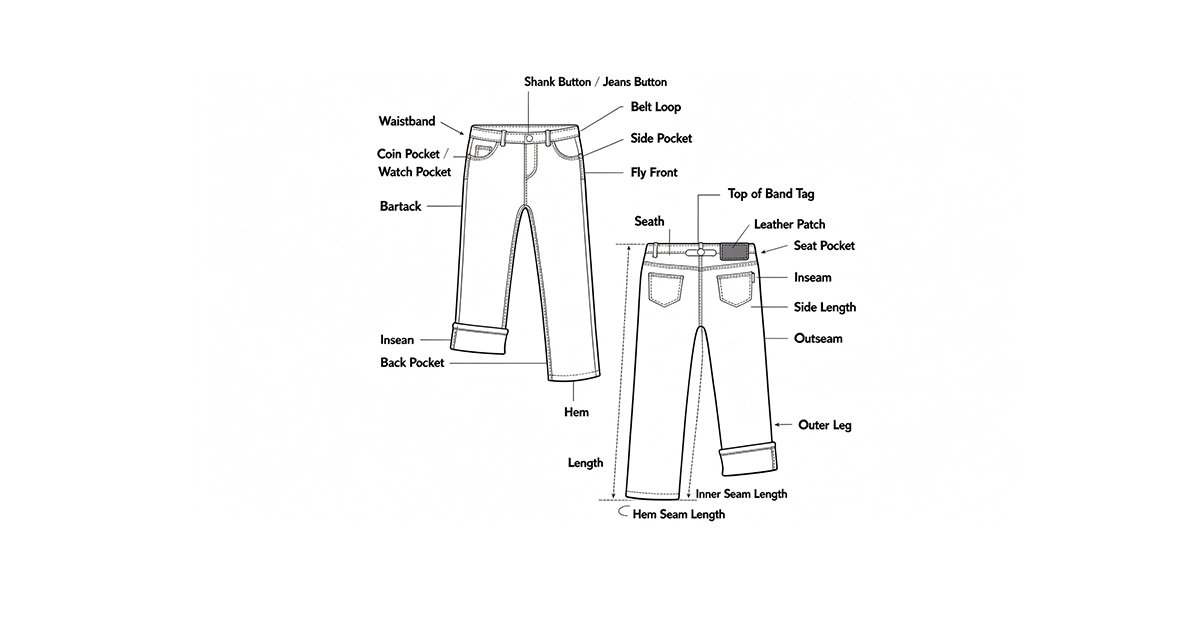
Waist buttons are the primary closure fitting at the top of the jean fly. Standard denim top buttons use a two-part prong construction that punches through waistband layers, securing with a back prong to prevent pull-out during heavy wear. Stock options include brass, antique brass, gunmetal, matte black and polished nickel finishes. Custom versions allow engraved brand logos, embossed patterns, custom diameter sizing and cutout detailing.
Common buyer pain point: Thin waistband denim layers paired with oversized heavy buttons often result in button pop-off issues after repeated wear. Many designers select a button based only on visual reference without testing fabric pull strength, leading to failed lab testing or post-delivery product returns. Another frequent issue is finish inconsistency between buttons and rivets, creating mismatched hardware tones once garments come off the wash line.
Jeans rivets and reinforcement studs
Rivets are reinforcing fittings placed at high-stress points: front pocket corners, coin pocket edges and back pocket corners. Original denim construction uses copper rivets to stop fabric tearing at seam junctions. Flat head, cone head and tubular rivets are the three primary construction styles. Custom rivets support engraved branding, custom color plating and varied head sizing.
Many new apparel brands confuse decorative studs with structural rivets. Decorative studs are visual fittings and cannot deliver the tensile reinforcement required for pocket stress points. Specifying decorative studs as pocket rivets is a recurring tech pack error that causes field failure and garment warranty claims. Wash compatibility is another consideration: raw brass rivets oxidize unevenly through stone wash, enzyme wash or acid wash cycles if plating is not sealed properly.
Jeans zippers and zipper tapes
Front fly zippers are built with metal teeth for denim applications. YKK metal zippers are the most widely specified option, while custom zipper tape color, slider engraving and tooth finish are available for brand-specific designs. Zipper tape weight and weave density matter heavily with heavyweight raw denim; lightweight tape can stretch and distort with repeated opening and closing.
Design teams often overlook slider profile. Bulky zipper sliders create unwanted bulk inside the fly, altering how the waistband sits against the body. When specifying zippers for stretch denim, zipper length tolerance must be adjusted to account for fabric stretch properties. A fixed-length zipper that works for rigid denim can bind and crack during wear on high elastane denim blends.
Belt loops and waistband bar tacks
Belt loops, also known as belt carriers, are fabric loops stitched onto the waistband. While many carriers use the same denim shell fabric, custom woven tape, leather, faux leather and webbing belt loops are popular detailing choices for streetwear denim. Width sizing ranges from standard 32mm loops up to wide 50mm carriers for oversized belt styling.
Bar tacks are dense reinforcing stitches, often categorized as fitting construction rather than decorative print. Bar tacks anchor belt loops, pocket openings and fly ends. Inconsistent bar tack stitch count is a common factory-side quality issue. Brands often discover weak belt loop retention only after sample wash testing, when loops tear away from waistbands during abrasion testing.
Leather patches, woven labels and brand tabs
Back waist leather patches are one of the most recognizable jean fittings. Real cow leather, vegan faux leather, suede and canvas patch substrates support debossed, embossed, foil printed or heat transfer branding. Patch shape can be fully custom: shield shapes, curved cutouts, asymmetrical profiles and die-cut notches are all viable options during sampling.
Woven labels and size tabs are secondary branding fittings, usually sewn into the waistband interior. Custom woven labels can match hardware metal tones or use contrast thread colors to reinforce brand identity. Many brands run into alignment issues when placing patches on curved waistbands. Flat patch artwork created without curved pattern distortion leads to misaligned logos once the patch is sewn onto the finished waistband.
Metal eyelets, snap buttons and side fasteners
Metal eyelets are hollow ring fittings used for lace-up side seams, waist adjustment panels or decorative pocket accents. Eyelets vary by inner diameter, rim height and plating finish. For heavy denim, double flange eyelets are preferred over single flange options to prevent pulling through thick fabric layers.
Snap fasteners are commonly used on cargo pocket flaps, back pocket closures or side adjuster tabs. Four-part metal snaps deliver higher pull resistance than plastic alternatives. Snap finish must match the rest of the garment hardware to avoid tone mismatch after washing. A frequent development mistake is selecting thin snaps for multi-layer stacked fabric; snaps will separate under repeated opening force.
Decorative studs, spikes and custom metal appliqués
Ornamental studs, pyramid spikes and metal appliqués fall into decorative jean fittings, used for pocket detailing, side seam accents or waistband ornamentation. These fittings are not structural and cannot replace rivets for reinforcement. Custom cut metal shapes, engraved plates and shaped metal charms can be stitched or riveted onto denim for signature brand detailing.
Designers should evaluate the sharpness of decorative metal fittings before final sampling. Rough unpolished edges on studs create wearer skin irritation, which triggers consumer complaints and product safety reviews. Metal decoration placement also affects wash handling: protruding metal fittings can catch wash drums during garment washing, causing fabric snags and surface damage.
Pocketing lining fabric
Pocket lining is a textile fitting separate from outer denim shell fabric. Cotton poplin, twill and lightweight plain weave fabrics are standard for jean pocket bags. Some premium denim lines use contrast color pocket lining as a subtle hidden brand detail. Pocket lining weight selection balances durability against bulk inside pockets.
Lightweight pocket linings tear easily with frequent heavy item storage. Over-heavy lining adds stiffness and bulk that distorts the front pocket silhouette. Stretch denim designs need lining fabric with matching stretch recovery; non-stretch pocket lining restricts fabric movement and creates unwanted pulling across the front thigh area during wear.
Binding tape, seam tape and edge piping
Binding tape and piping are textile fittings used to finish raw edges on pocket openings, waistbands or custom cut seams. Cotton tape, polyester tape and faux leather piping create contrast edge definition. Piping adds dimensional linework along seams and is widely used in custom streetwear denim detailing.
A common sample issue is piping shrinkage during wash. If the piping substrate and denim shell fabric have different shrink rates, seams will ripple and distort after the first wash cycle. All tape and piping materials must go through pre-wash shrink testing before final pattern grading.
Drawcords, webbing straps and adjuster sliders
Drawcords and woven webbing straps are textile fittings for elasticated waistbands, cargo pant side tabs or adjustable hem designs. Braided cotton drawcord, flat woven tape and nylon webbing are standard substrates. Plastic or metal cord stoppers and sliders pair with drawcords for length adjustment.
Brands often overlook cord stopper bulk. Oversized sliders can sit awkwardly against the body, creating uncomfortable pressure points. Webbing strap strength testing is critical for adjustable side tabs; low tensile webbing stretches permanently after repeated pulling and loses adjustment function.
Custom engraved metal plates and logo bars
Custom metal logo bars and stamped metal plates are premium fittings for high-end denim collections. These fittings can be riveted onto back pockets, waistbands or side seams. Plating options extend beyond standard brass to antique silver, matte gunmetal, brushed nickel and hand-distressed custom finishes.
The primary pain point with custom metal plates is minimum tooling cost. Each unique shape or engraving requires custom metal molds. Many independent brands underestimate tooling lead times, creating schedule delays if hardware tool development runs parallel with denim fabric sampling. Plating durability testing is also required; low-quality plating will chip during wash or abrasion testing.
Fringe tassels, lace trim and decorative textile embellishments
Fringe, tassels and lace trim are decorative textile fittings for fashion-forward denim styles. These soft fittings add movement and visual texture to hems, side seams or pocket edges. Natural cotton fringe and synthetic fiber tassels behave differently during washing: synthetic fibers can melt under high-temperature wash processes, while cotton fringe will fray naturally over wash cycles.
Many design teams fail to account for fringe shedding. Loose fibers drop off during washing and stain other parts of the garment unless pre-wash processing is completed on the fringe material before assembly. Fringe attachment points require reinforced bar tacks to prevent full detachment after repeated wear.
Elastic inserts and stretch gusset fittings
Elastic panels and stretch gussets are functional fittings used for waistband expansion, side seam flexibility and custom fit adjustments. Elastic tape can be hidden inside waistband construction or exposed as visible design detailing. Elastic composition determines recovery; low-quality elastic loses stretch quickly and creates sagging waistbands.
When specifying elastic fittings for denim, fabric friction is a key consideration. Exposed elastic can rub against skin and cause irritation unless edge finishing is applied. Elastic shrinkage must be tested together with denim shell fabric to prevent seam pulling after washing.
Hardware finish compatibility with denim wash processes
Not all metal fittings survive all denim wash recipes. Raw brass develops patina, sealed plating resists fading, while cheap plating will peel or flake under heavy enzyme, stone, bleach or pigment wash. Hardware must be submitted to pre-wash testing with the exact wash recipe planned for production garments.
This is one of the most frequent causes of sample rework. Designers select hardware based on static dry samples, and only discover finish failure once hardware is washed alongside denim. Wash testing should simulate full production wash cycles, not simple hand washing.
Fitting dimensional tolerance and pattern grading
Every fitting has dimensional tolerances that must be added to the garment pattern. Buttons, rivets and eyelets occupy physical space on pattern pieces. If pattern markers do not accommodate fitting dimensions, seam allowances become too tight during assembly, leading to sewing difficulty and misaligned hardware placement.
When grading patterns across full size runs, fitting placement coordinates must shift proportionally across small, medium and large sizes. Fixed hardware placement coordinates from a size M sample cannot simply copy over all sizes, resulting in rivets or buttons sitting off-center on larger or smaller pant sizes.
Lab testing requirements for jean fittings
Finished fittings must pass relevant garment safety and durability testing, including pull strength test, corrosion resistance test and abrasion test. Decorative small metal components must also meet safety standards to reduce choking risk for apparel sold in youth markets.
Brands sometimes assume that stock hardware automatically passes testing. Stock fittings can fail pull strength tests once installed on heavyweight denim, because installation method impacts final performance. Testing should be completed after fittings are attached to actual denim swatches, not tested as loose standalone hardware.
How fitting selection shapes brand differentiation in custom denim
For most denim apparel brands, the jean shell fabric is the first design decision, but fittings are what separate mass-market jeans from distinctive brand pieces. A carefully curated set of hardware and decorative fittings creates a signature look that customers associate with your label. Many streetwear denim lines build their whole brand visual identity around custom rivet engraving, unique patch shapes or non-standard buckle profiles.
The challenge lies in balancing creative vision against manufacturability and wash performance. Many creative fitting concepts look compelling on flat sketches but cannot survive mass production or standard denim wash cycles. Early hardware prototyping alongside fabric sampling helps identify these issues before full production commitments.
Common mistakes to avoid during jeans fitting specification
- Specifying decorative fittings as structural reinforcement hardware, leading to pocket tear failures.
- Skipping pre-wash compatibility testing for metal hardware against your planned denim wash recipe.
- Using mismatched metal finishes across buttons, rivets and zippers without accounting for wash patina.
- Ignoring fitting dimensional tolerance during pattern creation, creating assembly bottlenecks.
- Selecting fittings based only on visual reference without completing pull strength testing.
- Overlooking fabric shrink differences between denim shell and textile fittings like piping or tape.
- Neglecting size grading adjustments for hardware placement across full size runs.
- Underestimating custom hardware tooling lead times and budget requirements.
Closing notes for jeans fitting development
Jeans fittings are small components, but their impact on garment quality, brand aesthetics and production workflow is substantial. Whether you are working on heavy rigid raw denim, stretch streetwear bottoms, cargo denim or fashion decorated jeans, hardware and textile fitting specification needs equal focus alongside fabric selection and cut design.
Design teams that build robust fitting specification workflows reduce sample rework, cut unexpected production delays and create more consistent final garments. Every fitting choice carries tradeoffs between visual design, durability, wash performance and manufacturability. Detailed technical documentation and early sample prototyping remain the best way to reduce risk when integrating custom fittings into denim collections.